Table of Contents Show
Air quality has become an increasing concern for many Malaysians, especially during the haze season or periods of prolonged dry weather. It is common to hear daily updates about the Air Pollution Index (API), but many people are still unsure what the numbers actually mean or when they should start taking precautions.Whether you are commuting to work, exercising outdoors, or simply planning family activities, understanding the API can help you make better decisions to protect your health.
Poor air quality does not only affect outdoor comfort. It can also impact indoor environments if proper ventilation and air filtration are not in place. This guide explains how Malaysia’s Air Pollution Index works, what each API category means, and practical steps you can take to reduce your exposure when air quality worsens.
What Is The Air Pollution Index (API)?
The Air Pollution Index (API) is Malaysia’s official system for measuring and reporting air quality. It combines readings from several common air pollutants into a single number that is easier for the public to understand.
Higher API readings indicate poorer air quality and greater potential health risks. The Department of Environment (DOE) continuously monitors air quality through monitoring stations across the country, allowing the public to stay informed about current conditions.
What Does The API Measure?
The API is calculated using several pollutants that commonly affect air quality, including:
- Particulate Matter (PM10)
- Fine Particulate Matter (PM2.5)
- Carbon Monoxide (CO)
- Sulphur Dioxide (SO₂)
- Nitrogen Dioxide (NO₂)
- Ground-Level Ozone (O₃)
Among these, PM2.5 often becomes the primary concern during haze episodes because the particles are extremely small and can penetrate deep into the lungs.
Why Does The API Change Throughout The Day?
Air quality is constantly changing due to weather conditions, traffic congestion, industrial activities, and seasonal factors. During the southwest monsoon, transboundary haze from regional forest fires can significantly increase API readings across Malaysia.
Heavy traffic during peak hours and local open burning can also contribute to temporary increases in pollution levels. Because these conditions change throughout the day, it is always advisable to check the latest API readings before spending long periods outdoors.
Understanding Malaysia’s API Categories
Malaysia classifies API readings into several categories to help the public understand the current air quality and recommended precautions.
| API Reading | Air Quality | Recommended Actions |
| 0 – 50 | Good | Air quality is considered safe for normal outdoor activities. |
| 51 – 100 | Moderate | Generally acceptable, although unusually sensitive individuals should monitor symptoms. |
| 101 – 200 | Unhealthy | Children, older adults, and individuals with respiratory conditions should reduce prolonged outdoor activities. |
| 201 – 300 | Very Unhealthy | Everyone should minimise outdoor exposure whenever possible. |
| Above 300 | Hazardous | Avoid outdoor activities and remain indoors whenever possible. |
Knowing these categories allows you to make informed decisions, whether it means postponing outdoor exercise, wearing a face mask, or improving your indoor air quality.
How Poor Air Quality Can Affect Your Health
Air pollution affects everyone differently. While healthy adults may only experience mild discomfort, certain groups are more vulnerable to prolonged exposure.
1. Short-Term Effects
Even a few hours of exposure to poor air quality can lead to symptoms such as:
- Eye irritation
- Sore throat
- Coughing
- Runny nose
- Headaches
- Difficulty breathing
These symptoms may become more noticeable when API readings remain elevated for several consecutive days.
2. Long-Term Health Risks
Repeated exposure to polluted air over months or years may contribute to more serious health concerns, including respiratory diseases and reduced lung function. Individuals with asthma, chronic obstructive pulmonary disease (COPD), or cardiovascular conditions may also experience worsening symptoms during periods of poor air quality.
3. Who Should Take Extra Precautions?
Certain groups should pay closer attention to daily API readings, including:
- Young children
- Older adults
- Pregnant women
- Individuals with asthma or allergies
- People with heart or lung conditions
For these individuals, limiting exposure during high API periods is especially important.
Practical Ways To Protect Yourself During High API Days
Understanding the API is only the first step. Taking practical precautions can help reduce your exposure to air pollution.
1. Monitor Daily API Readings
Checking the daily API before heading outdoors helps you stay informed about current air quality conditions. Since API readings can change throughout the day, reviewing the latest updates allows you to adjust your plans if necessary. During periods of poor air quality, limiting unnecessary outdoor activities can help reduce your exposure to harmful pollutants.
2. Reduce Outdoor Activities
When the API reaches the Unhealthy category or higher, try to minimise prolonged outdoor exposure. Activities such as jogging, cycling, or spending long hours outside can increase the amount of pollutants you breathe in. If possible, postpone outdoor activities or move them indoors until air quality improves.
3. Keep Windows Closed When Necessary
During haze episodes, keeping windows and doors closed can help reduce the amount of polluted air entering your home. If you are using air conditioning, ensure it is properly maintained to support cleaner indoor air. Once outdoor air quality improves, you can ventilate your home again.
4. Improve Your Indoor Air Quality
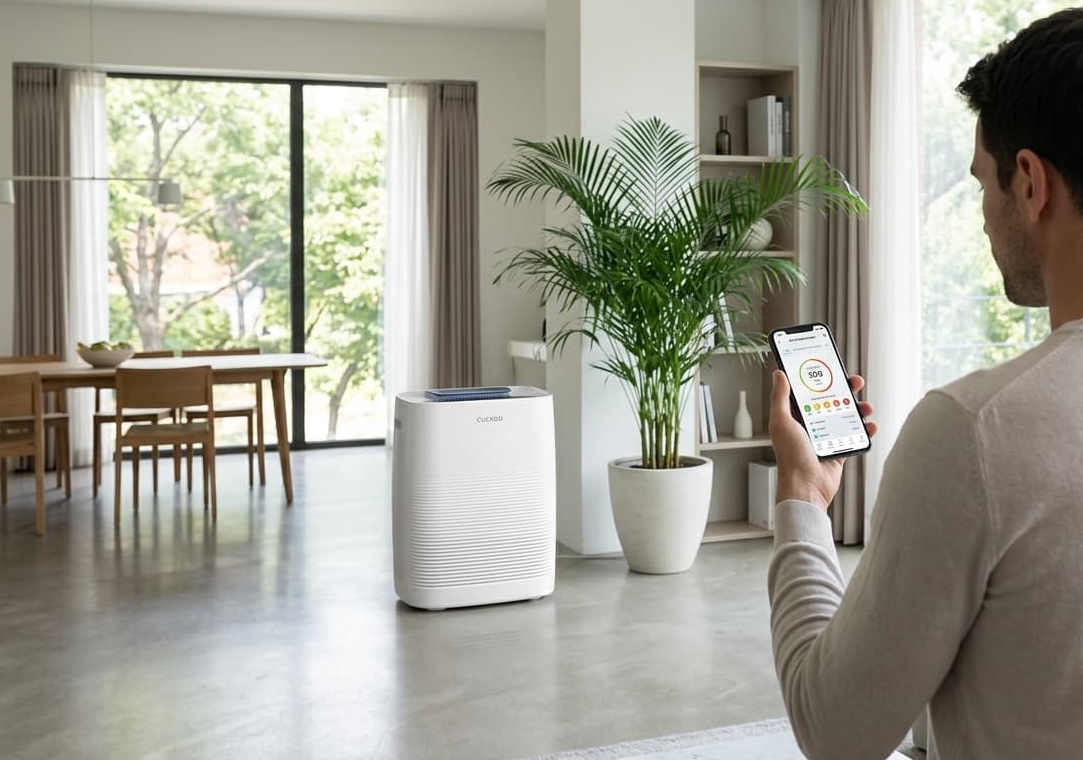
Good indoor air quality is especially important during periods of high API since most people spend much of their time indoors. Regular cleaning and reducing indoor dust can help, while using an air purifier with an efficient filtration system provides an additional layer of protection against fine airborne particles and allergens.
Using a suitable air purifier can help remove airborne particles such as dust, allergens, and fine pollutants, creating a more comfortable indoor environment during periods of poor air quality.
Choosing The Right CUCKOO Air Purifier For Your Home
Different homes have different air purification needs. Choosing a model based on room size and daily usage helps ensure better performance while maintaining cleaner indoor air.
1. CUCKOO C+ Model For Everyday Homes With Air Purification And Humidity Control
The CUCKOO C+ Model is designed for households looking for both cleaner air and better humidity control in their living spaces. Combining an air purifier and humidifier in one unit, it helps create a more comfortable indoor environment, especially during periods when outdoor air quality becomes a concern. The True HEPA H14 Filter helps eliminate up to 99.95% of airborne dust, while the built-in Plasma Ioniser works to transform harmful substances into cleaner air.
Its superfine humidification technology releases moisture particles to help improve indoor comfort, even in wider spaces. The C+ Model also comes with multiple operating modes, including Auto Mode, Baby Mode, Turbo Mode, Room Care Mode, and Auto Humidity Mode. For families looking for an air purifier that supports both air cleanliness and indoor comfort, the CUCKOO C+ Model offers a practical all-in-one solution.
2. CUCKOO K Model For Open-Plan Living Areas
Homes with connected living and dining spaces often require an air purifier with wider coverage. The CUCKOO K Model is designed for spaces of up to 710 square feet, making it suitable for larger family areas and open-plan layouts. Its four-stage filtration system works together with a high Clean Air Delivery Rate (CADR) of 520 m³/h to circulate and clean indoor air more efficiently.
Features such as Auto Mode automatically adjust fan speed according to current air quality, while Baby Mode provides quieter operation when lower noise levels are preferred. For households that need stronger airflow without sacrificing everyday comfort, the K Model provides an effective solution for maintaining cleaner indoor air across larger shared spaces.
3. CUCKOO U Model For Large Homes And Offices
For spacious homes, open offices, or commercial environments, the CUCKOO U Model offers the largest coverage in CUCKOO’s air purifier lineup at up to 1,161 square feet. Its advanced four-stage filtration system features a True HEPA+ H14 Filter with a copper sulphide coating that provides antibacterial, antiviral, and antifungal properties while capturing up to 99.995% of airborne particles. A built-in CUCKOO Plasma Ioniser further helps improve indoor air quality between filter maintenance cycles.
The U Model also stands out with both a PM1.0 Fine Dust Sensor and a TVOC Sensor, allowing it to monitor both fine particulate matter and volatile organic compounds commonly found indoors. Together with multiple operating modes, including Smart, ECO, Baby, Sleep, and Turbo Plus, the purifier automatically adapts to changing indoor conditions. For larger households or workplaces where air quality is a priority, the U Model delivers powerful performance while maintaining convenient day-to-day operation.
Conclusion
Understanding Malaysia’s Air Pollution Index (API) allows you to make better decisions about your daily activities and take appropriate precautions when air quality deteriorates. By monitoring API readings and adopting simple protective measures, you can reduce unnecessary exposure to air pollution and create a healthier environment for yourself and your family.
During periods of poor air quality, improving your indoor environment can make a meaningful difference. If you are looking for an air purifier that suits different room sizes and household needs, explore CUCKOO air purifier range to find a model that best fits your home, lifestyle, or workspace.