Table of Contents Show
You leave a bottle of coconut oil in an air-conditioned bedroom overnight, and by morning it has turned into a white solid. Many people assume it has gone off. It has not, and the change tells you something useful about what is inside the bottle.
Virgin coconut oil is one of the simplest ingredients in a bathroom cabinet, yet its labels cause a lot of confusion. This guide explains what the term means, how it differs from refined oil, and how it has traditionally been used for massage, skin and hair.
What Is Virgin Coconut Oil?
Virgin coconut oil is unrefined oil pressed from coconut flesh. The word virgin means it has not been bleached, deodorised or otherwise stripped down after pressing.
People often confuse it with cold pressed coconut oil, but the two terms describe different things. Virgin refers to the oil being unrefined, while cold pressed describes how it was extracted, which is mechanically and without heat. An oil can be both at the same time.
Words such as pure or natural on a label say little about how an oil was made. Virgin and cold pressed are the more specific terms, so they are the ones worth looking for.
How Virgin Coconut Oil Differs From Refined Coconut Oil
Three everyday differences set the two apart once you know what to look for.
1. It Still Smells Like Coconut
Most supermarket coconut oil has been heated, bleached and deodorised, which is why it is clear, odourless and inexpensive. Virgin oil keeps its natural scent, so your nose is the simplest test. If a bottle sold as virgin coconut oil smells of nothing at all, read the label again.
2. It Turns Solid in Cool Rooms
Coconut oil solidifies below about 24°C, which an air-conditioned room can easily reach. A solid block is not a sign of spoilage. Standing the bottle in warm water for a few minutes turns it back into a liquid, and the shift is a normal property of genuine coconut oil.
3. It Costs More to Produce
Cold pressing gets far less oil from the same coconut than heat extraction does. That lower yield is the honest reason cold pressed virgin oil usually sits at a higher price than refined oil.
Traditional Uses of Virgin Coconut Oil in Massage
Coconut oil is popular for massage because it is light enough to glide easily and rich enough to cover a whole body. It melts on contact with warm hands, so you control exactly how much you use.
It also has good slip without feeling greasy, so hands glide rather than drag, and it absorbs into the skin instead of sitting on the surface. That balance is why coconut oil is a standard base for homemade massage blends.
1. Warming the Oil Before You Begin
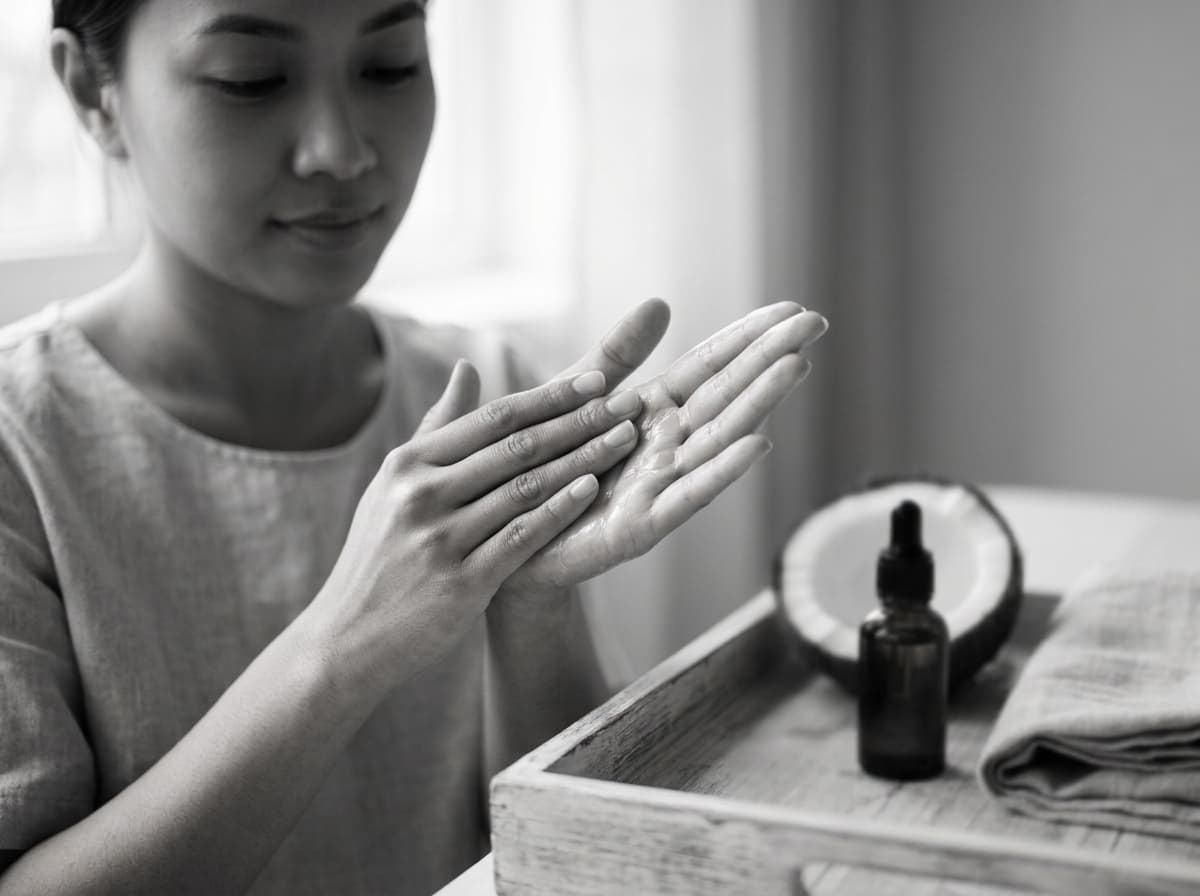
Scoop a small amount, rub it between your palms and let it melt before it touches the skin. Warm oil spreads more evenly and feels more comfortable than oil taken straight from a cold jar. The habit suits a home massage because it needs no equipment at all.
2. Blending With Essential Oils
Coconut oil can be used as a carrier oil to dilute essential oils before applying them to the skin. Lavender is a popular choice for a relaxing blend, while ginger offers a warmer, spicier scent. Always follow the recommended dilution guidelines and check that the oils are suitable for topical use.
3. Slow, Steady Strokes
Using long, gentle strokes can help make an oil massage feel more relaxing. Take your time and use consistent pressure, especially when massaging areas that feel tense. Setting aside a few quiet minutes for massage can also be a simple way to unwind at the end of the day.
Using Virgin Coconut Oil in a Skincare Routine
Virgin coconut oil can be used on the face, body and hair, depending on your skincare needs and how your skin responds to it. Using the right amount and applying it appropriately can help you include it in your personal care routine.
1. On the Face
After washing, warm a few drops in your palm and press them onto the skin with upward movements. A few drops are enough for the whole face. Coconut oil does not suit everyone’s face, so patch test on a small area for a week before using it more widely, and keep it to the body and hair if your skin is acne-prone.
2. On the Body
Apply the oil to damp skin after bathing, when it spreads easily. Rubbing it over the arms, legs and shoulders takes only a minute, which makes daily use easy to keep up. It also sits comfortably alongside other steps in a body care routine, such as a scrub before the shower.
3. On Hair and Scalp
Malay and South Asian households have reached for coconut oil before washing their hair for generations. A common routine is to shampoo and rinse, then massage a few drops into the hair and scalp, leave it on for a while, rinse, and follow with a conditioner.
For weekly care, warm the oil mildly, massage it into the scalp, comb the hair through, and wrap it in a warm towel for at least 4 hours or overnight. If you want to build the rest of a wash day around it, the hair care collection lists shampoos and conditioners to pair with it.
Who Should Take Extra Care With Coconut Oil
Anyone with sensitive skin should check the ingredient list before using coconut oil. Pure virgin coconut oil typically contains just one ingredient, Cocos nucifera (coconut) oil, making it easier to check for known allergies.
If you are pregnant, breastfeeding or considering using coconut oil on a baby, consult a healthcare professional for advice on suitable products and safe application. Always follow the product label instructions, especially when using it on delicate or sensitive skin.
Choosing and Storing Virgin Coconut Oil
1. Read the Ingredient List
A pure bottle lists a single ingredient. Extra fragrance, colour or other additions mean you are buying something other than plain virgin coconut oil.
2. Check What the Oil Is Intended For
Coconut oil sold for skin and hair is not meant for the kitchen. If you want to cook with it, buy food-grade coconut oil labelled for that purpose.
3. Store It Somewhere Cool
Keep the bottle out of direct sunlight with the cap closed. If it solidifies in a cool room, a few minutes in warm water brings it back to a liquid.
Final Thoughts on Choosing Virgin Coconut Oil
The right virgin coconut oil depends on how you plan to use it. For massage, the way it melts in your hands makes it easy to work with.
For hair, a weekly warm oil treatment is the traditional method. For the face, start small and watch how your skin responds.
For readers who would like a ready option, TANAMERA offers a Cold Pressed Virgin Coconut Oil in a 100ml bottle, and its massage oil range includes blended oils for those who prefer not to mix their own.